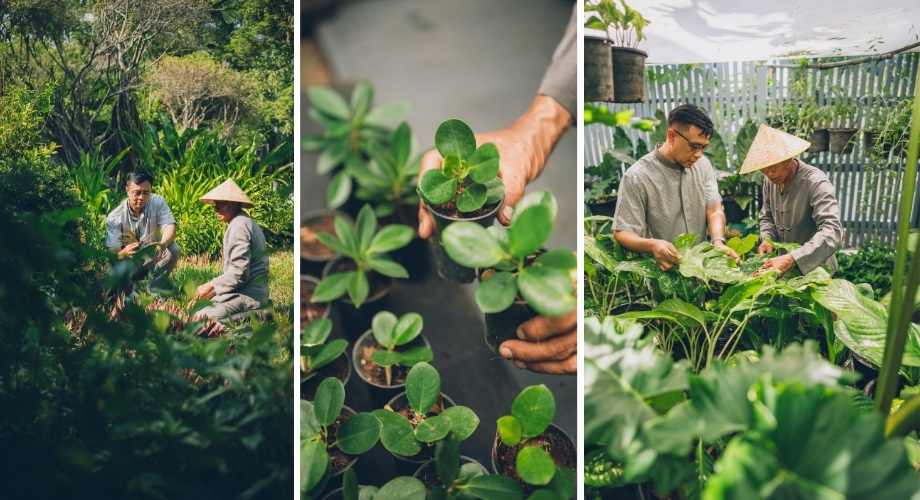
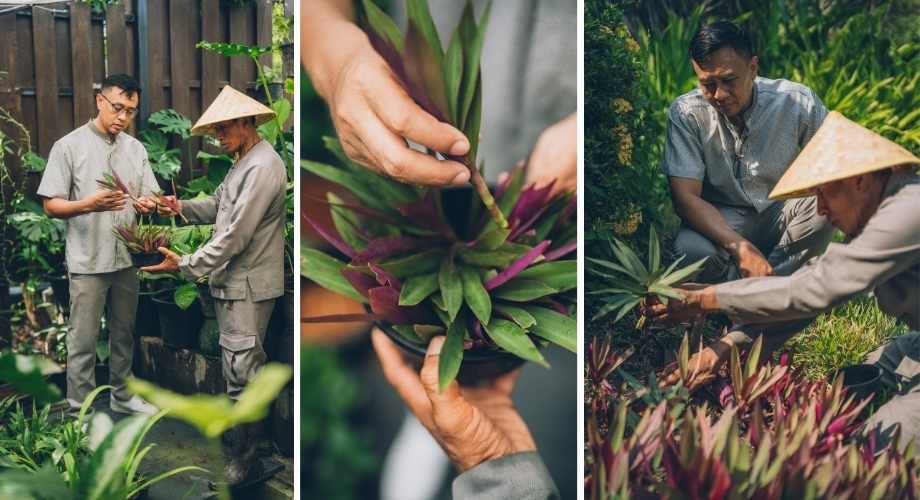
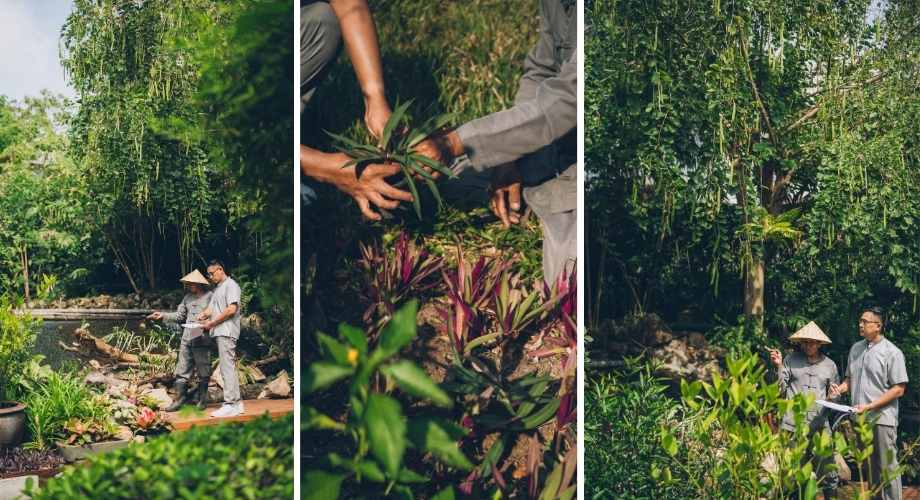
At Anantara Lawana Koh Samui Resort, a Green Growth Platinum member resort, sustainability is not tucked away behind the scenes. It is cultivated into the landscape itself. From Lawana Nursery and the organic farm to chemical-free gardening and circular waste systems, the resort is building a quieter, more grounded model of sustainable hospitality in Koh Samui. We spoke with Landscaping Manager Panuwat Songprasert about what that looks like in practice, and why it matters for the future of the island.

Most people have no idea what actually happens to organic waste at a resort. At the Lawana Nursery and Organic Farm, it becomes something genuinely valuable. Walk us through how that works.
At Anantara Lawana, we don’t look at organic waste as waste. We look at it as a resource.
Every day, vegetable trimmings, fruit peels and other organic materials from the kitchen are sorted and brought into Lawana Nursery. From there, they go through natural processes such as fermentation, composting and microbial enrichment, turning them into fertile soil, organic fertiliser and other biological inputs.
That circular system allows us to return nutrients to the landscape, support healthier plants, improve soil quality and reduce our reliance on outside inputs. It’s a simple idea, but a powerful one - taking something that would normally be thrown away and turning it into something that helps life thrive across the resort.
Guests are sitting down to a meal with vegetables, herbs, and edible flowers grown just steps away. That's not something you see every day. How did it come about?
It started with a very simple thought: we wanted the landscape to be part of the guest experience, not just something beautiful to look at.
So instead of treating the gardens as purely decorative, we began growing herbs, vegetables and edible flowers in our organic farm. Today, the kitchen and garden teams work very closely together, and our chefs can pick fresh ingredients directly from Lawana Nursery.
That’s what makes the farm-to-table experience feel real here. Guests are not just hearing the story of freshness and sustainability - they’re tasting it. And for us, that connection between landscape, cuisine and sense of place is very important.
The farm does a lot for the resort, but what does it give back to Koh Samui as a popular tourist destination itself?
Koh Samui is a fragile island ecosystem, so I believe sustainable resort operations have a real responsibility here.
The Lawana Nursery helps us reduce organic waste, avoid chemicals and restore soil health, and all of that supports biodiversity in a very direct way. It also gives us a space to share knowledge - with team members, with guests and, where possible, with the wider community - about more sustainable ways of living and growing.
On a bigger level, this kind of work also supports the standards we’re trying to build towards as a sustainable resort. In our wider sustainability framework, Green Growth 2050 is part of that journey, because it gives structure to how environmental progress is measured and improved over time. So for me, the farm is not only helping the resort - it’s also helping protect the long-term future of Koh Samui as a destination.
The moment you took chemicals off the table, nature started showing up again. What have you seen, and what has that meant to you?
Stopping the use of chemicals was a real turning point.
Over time, we started to see the garden come back to life in very clear ways - healthier soil, the return of beneficial insects, and underground life like earthworms. These are small things, but they tell you a lot. They’re natural signs that the ecosystem is becoming healthier and more balanced again.
For me, it was a reminder that nature doesn’t need us to control everything. It needs the right conditions. When you work with nature instead of against it, it has an incredible ability to restore itself.
If this farm could change the way guests think about the natural world, what would you want that to be?
I hope guests leave feeling that sustainability is not something distant or complicated. It can be practical, visible and part of everyday life.
When you eat ingredients grown on site, or walk through a landscape that has been restored naturally, you start to understand the connection between small daily actions and environmental impact. That shift in understanding matters.
If a guest leaves with even a slightly different perspective - if they see that caring for nature can be both simple and meaningful - then I think Lawana Nursery and organic farm have done their job.
Rapid fire:
The one plant at Lawana you'd fight someone over?
Beach Vitex (Vitex trifolia subsp. Litoralis)
I love it because it’s incredibly resilient. It can handle strong wind, salt and intense sun, and it also helps stabilise the soil and protect the coastline from erosion. For a place like Koh Samui, that makes it very meaningful.
Most unexpected wildlife you've spotted on the grounds?
The stingless bees
It’s tiny, but very important. It plays a key role in pollination, and its return is a good sign that the ecosystem is becoming more balanced again.
Something guests walk past every day without realising it came from the farm?
The edible flowers on their plates - and even some of the soil in landscape around them.
A lot of that begins with our organic waste process, so what looks small on the surface is actually part of a much bigger cycle.
One thing anyone could grow at home, even with zero garden and zero skills?
Simple herbs like basil or mint
They’re easy to grow, don’t need much space and are a good way to start connecting with what you eat.
Something the farm has taught you that has nothing to do with plants?
Patience
Working with nature teaches you that results take time. Real progress comes from consistency, observation and respecting the natural process.