Anantara’s 25th-anniversary People Who Inspire series continues, celebrating the people who bring the brand’s spirit to life.
As the brand marks 25 years of meaningful travel, we are turning the spotlight to the people who have shaped its story. The new ‘People Who Inspire’ series celebrates the artisans, conservationists, spiritual guides and long-serving hosts whose passion brings each destination to life, reminding travellers that the true essence of luxury lies in human connection.
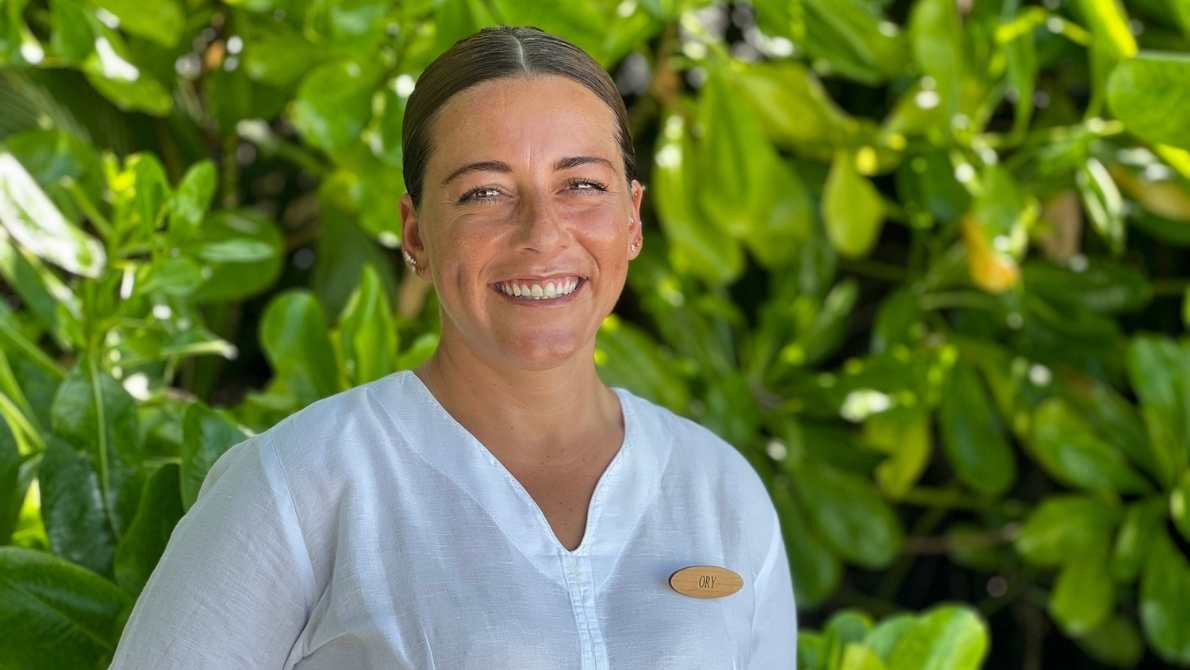
Next in the series is Oriana Migliaccio, Marine Biologist at Anantara Dhigu Maldives Resort, Anantara Veli Maldives Resort and Naladhu Private Island Maldives. A PADI Master Scuba Diver Trainer with a PhD in Life and Biomolecular Sciences, Oriana has built her career around the study and preservation of coral reefs. Her path has taken her from the Mediterranean waters of her native Naples to the jungles of Borneo and, finally, to the Maldives.

You were raised on the shores of Naples and spent your winter breaks at the aquarium. How did those early years by the Mediterranean Sea ignite the spark that led you to a PhD and a life dedicated to the ocean?
When I was little, my mum, my grandmother and I would take long walks along the beach. They would tell me how easy it was, when they were young, to find sponges, seahorses and beautiful shells on the shore. They spoke about a coastline once thriving with marine life, and how much of it slowly disappeared over time.
That stayed with me, and I started wondering why. Why were the seahorses gone? Why couldn't I see them anymore? Those questions pushed me to start reading about the wonders of the sea, climate change and pollution. The reading turned into passion, and that passion became a healthy obsession.
I focused on understanding how environmental factors influence marine animals, and how they respond at genetic, physiological and population levels. I wanted to understand not only why species disappear, but what we can do to slow or even prevent it.
Pursuing a PhD was never just about academia. It was about gaining the tools to become a voice for the ocean and dedicating my life to protecting what first inspired me as a child. I truly hope future generations will still be able to experience the beauty of the seas and oceans we are lucky enough to witness today.
You have worked in the jungles of Borneo and now the sky-blue waters of the Maldives. What is it about the tropical marine world that keeps you in a constant state of discovery and conservation?
I saw a coral reef for the first time in the Red Sea, during my Open Water certification. It was my very first breath underwater. I descended, and suddenly I was immersed in a kaleidoscope of colours, with fish everywhere. I was weightless, moving freely in three dimensions, surrounded by shapes and colours I had never imagined could exist in nature.
I will never forget the feeling of being in another universe, seeing in real life the animals I had only read about. I remember a Napoleon wrasse, a species I was fascinated by for its ability to change sex, just calmly looking at me. It was huge, bigger than me. Then I noticed the coral polyps, their tiny tentacles opening and closing in synchrony, like an underwater dance.
I honestly didn't know where to look. I was so overwhelmed with excitement that I completely forgot I had a tank on my back, a regulator in my mouth, and people diving around me. That was the exact moment I knew I wanted to dedicate my life to tropical marine biology.
I wanted others to see what I was seeing, first my family and friends, and then everyone else. And I realised that if I wanted others to keep experiencing this beauty, I had to work to protect it, even if that meant living on the other side of the world.
You created the Reef Hero PADI specialty because you saw diving students wanting to make a positive impact. How does it feel to watch a guest transform from a holidaymaker into a citizen scientist under your guidance?
This is one of the most rewarding parts of my work. You can literally see the moment curiosity turns into care. It's like falling in love.
When a guest realises their actions, how they dive, what they touch, what they support, can protect an ecosystem, something shifts. They stop being visitors and become guardians. Watching that transformation reminds me that conservation is not just about science. It is about connection, emotion and empowerment.
You lead Discovering Marine Biology for Kids sessions. What is the most surprising or moving question a child has ever asked you about the ocean, and how does their curiosity give you hope for the future?
Children often ask me, "If the ocean is alive, can it feel when we hurt it?" This question always stays with me. Children don't separate science from empathy, and I truly believe we shouldn't either.
The curiosity of our little VIPs gives me hope, because they see the ocean not as a resource, but as a living entity worth protecting simply because it exists and is alive. That mindset is exactly what the future needs. By the end of the session, to me and to them, the ocean becomes "mother ocean".
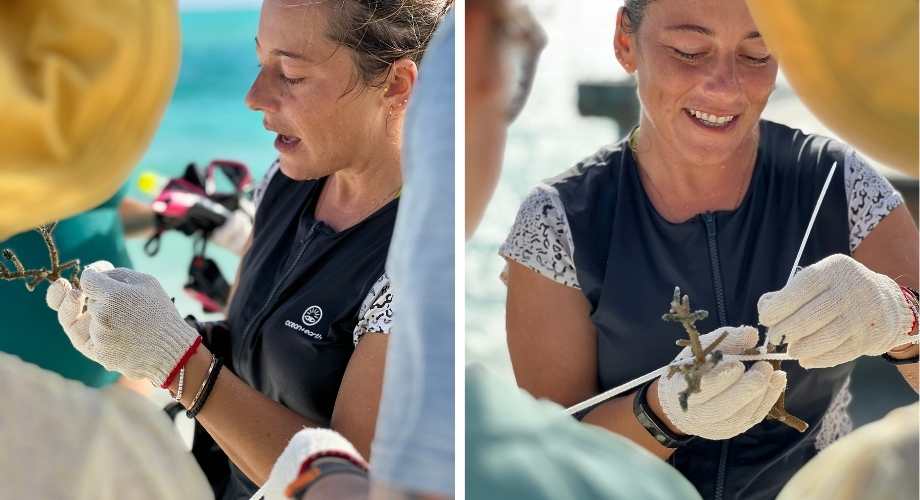
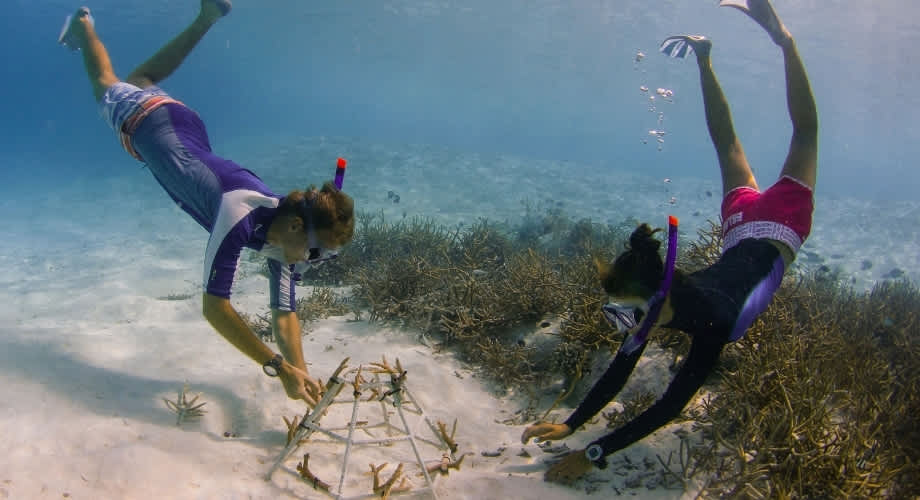
The HARP (Holistic Approach to Reef Protection) project has grown over 10,000 corals since 2017. When you see a guest return to the resort to check on the baby corals they adopted years ago, what does that connection tell you about the power of meaningful luxury?
We have many returning guests who come back to see how their baby corals have grown. They already follow the progress through photos, but seeing it with their own eyes always feels different. You can hear their excitement from far away, sometimes almost shouting with joy, because their tiny coral has grown into a small garden, now home to fish, crabs and other marine life.
In those moments, adults turn into children again, even if just for a little while. That is when you truly see that conservation becomes powerful when it becomes personal. It is their baby corals that have grown into a small reef, so naturally they want to protect it.
To me, meaningful luxury is not just about what guests experience during their stay. It is about what they carry with them after they leave. When someone feels connected to a living, growing reef, they become part of its story. That is where true impact and true change happen.
One of your unique workshops involves repurposing abandoned ghost nets into bracelets. Why is it important to you to turn a symbol of environmental damage into a meaningful keepsake for our guests?
Ghost nets are one of the most silent threats in our oceans, invisible yet deadly. Turning them into something meaningful changes the narrative completely. Instead of symbols of loss, they become symbols of action and awareness.
Before each workshop, we host a presentation focused on the ghost nets found in our lagoon. We share real photos and videos and tell the stories of the wildlife, often sea turtles, we have rescued and helped through recovery. It helps guests understand this is not a distant problem. It is happening right here, right now.
Then guests create their own bracelets using the same fibres that once trapped an animal for days or even weeks. They take something harmful and turn it into something meaningful. When guests wear these bracelets, they carry a reminder that small actions matter, and that each of us has a role in protecting the ocean. It turns a problem into a conversation, and a conversation into commitment.
You've stated that in the Maldives, sustainability is a necessity, not a trend. How do Anantara's long-term commitments, like the Paris 1.5°C goals, act as a shield for these islands over the next 25 years?
In the Maldives, a low-lying island nation, sustainability is not optional. It is survival. Long-term commitments like the Paris 1.5°C goals are not abstract global targets, nor are they simply KPIs or numbers to be achieved.
They represent real protection for real islands, real communities and real ecosystems. By aligning our operations with long-term climate goals, we are helping build resilience and protecting coral reefs, shorelines and livelihoods for the next 25 years and beyond.
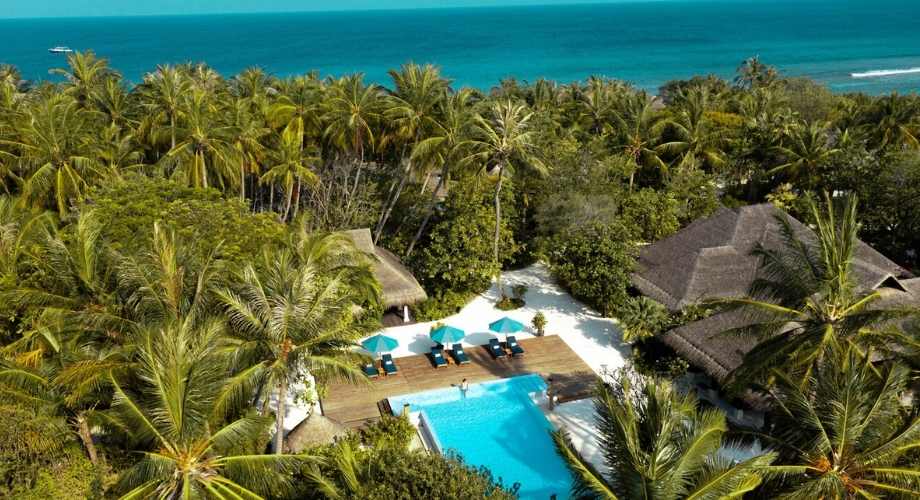
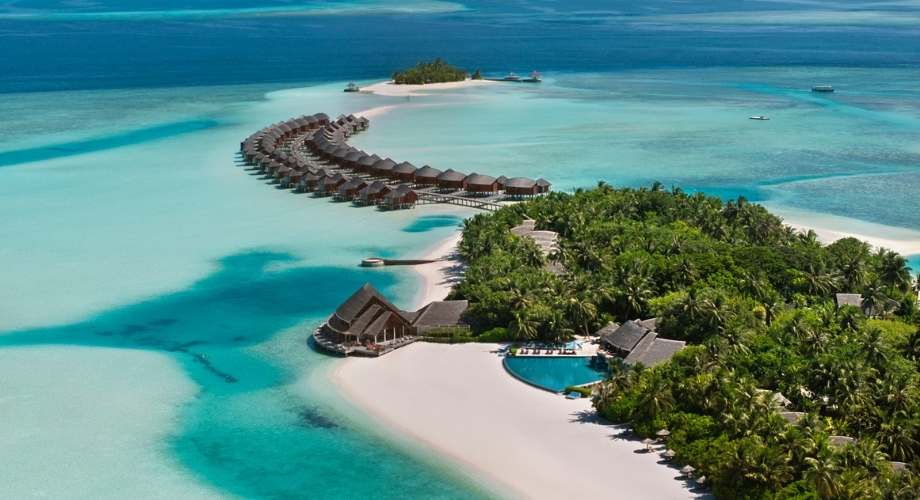
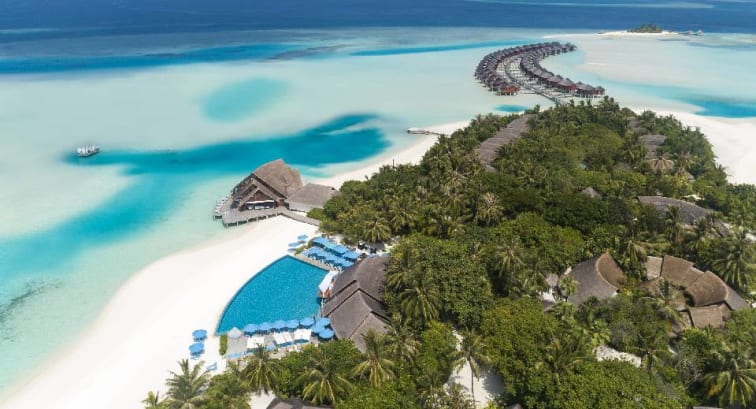
What is your personal vision for the legacy you want to leave behind in the Dhigu lagoon for the next generation of explorers?
My vision is simple. I want the next generation to inherit a lagoon healthier, more resilient and more alive than the one we found. I hope to leave behind thriving reefs, stronger conservation programmes, and a community of guests, team members and local partners who feel personally responsible for protecting this wonderful, fragile ecosystem.
I want them to feel that Dhigu is their home. If future explorers can swim in the Dhigu lagoon and feel what I feel today, then I will know I helped protect something truly meaningful.
Learn more about Anantara Hotels & Resorts' 25th anniversary celebrations here.